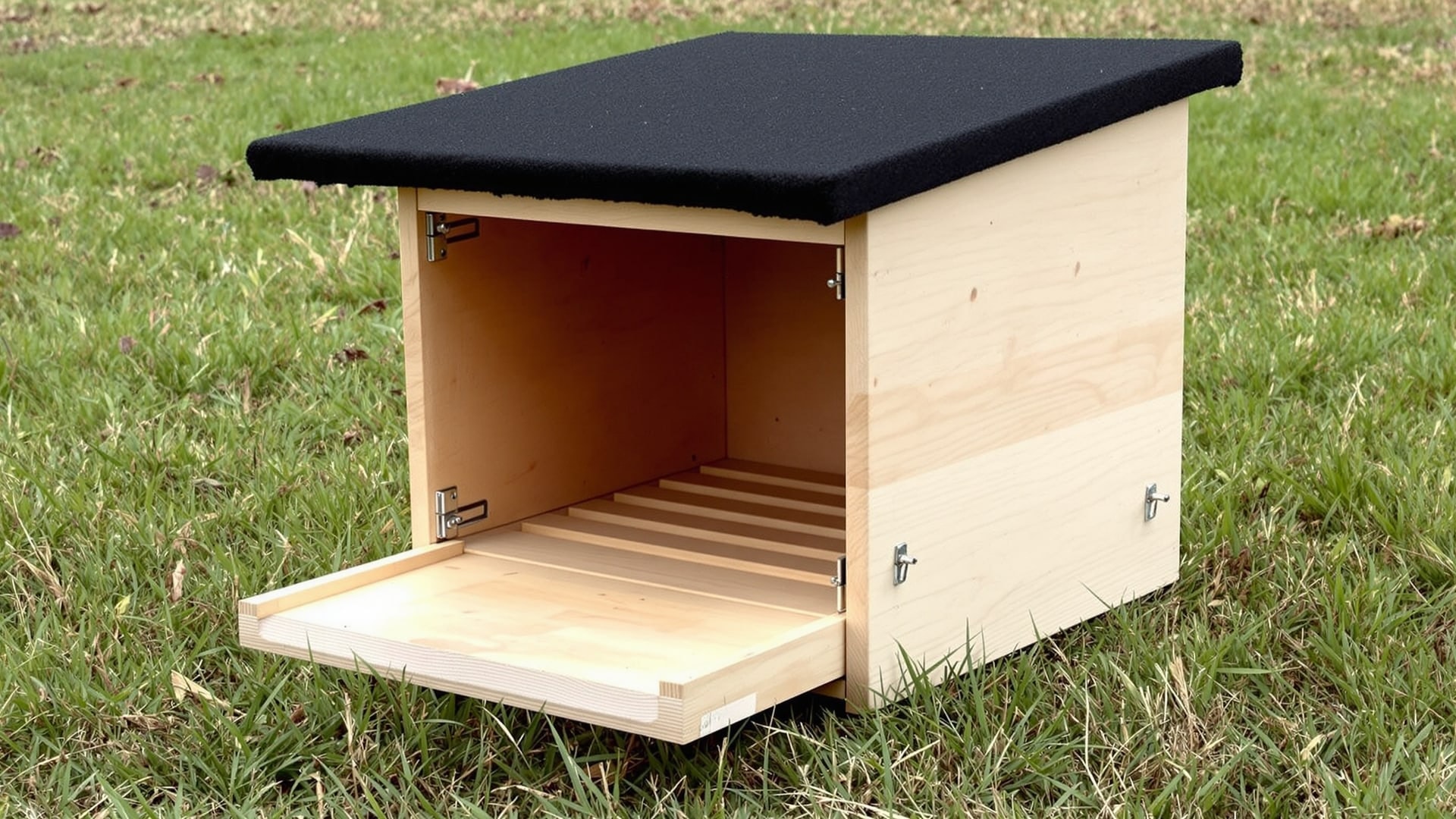
Outdoor owl box — camera ready (HK100007)
Handykam ceased trading. Nothing here is for sale, and no orders, enquiries or support can be handled.
The outdoor owl box was the largest and most substantial product the workshop made. A garden bird box is a pleasant weekend project; a tree-mounted owl box weighs fifteen kilos, goes up on ropes, and is expected to survive twenty years of Atlantic weather with a brood inside it. It was sold as a box on its own, camera-ready, and separately with a camera kit already matched to it.
Why the box existed
Barn owls have lost an enormous amount of their traditional nesting stock — old barns, hollow trees, derelict farm buildings — to conversion, demolition and tidier land management. Well-made nest boxes in the right places genuinely substitute for that, which is why box provision is a mainstream conservation activity rather than a hobbyist one. The Barn Owl Trust is the UK authority on the subject and its nestbox guidance remains the reference for anyone thinking about it seriously.
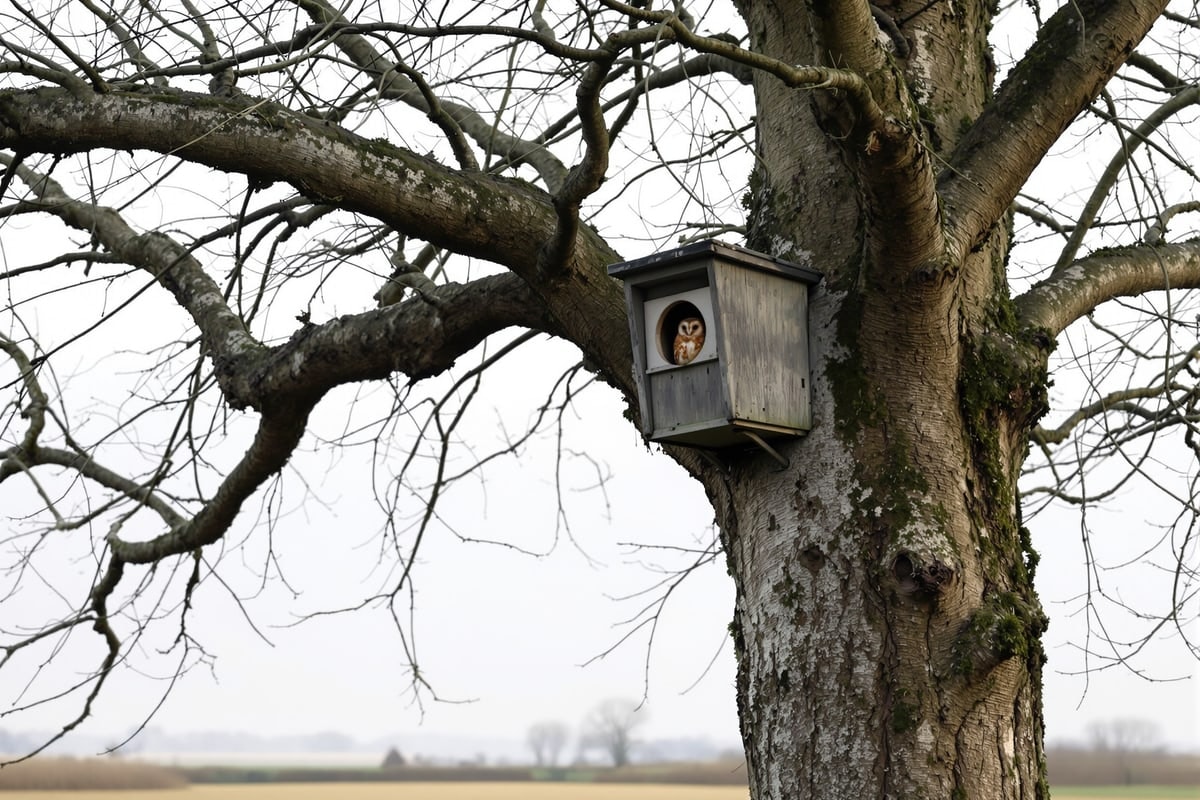
Design
The box followed the established outdoor barn-owl nestbox pattern: a deep body, a large entrance, and — the detail that distinguishes a real owl box from a big bird box — an owlet safety tray, a landing platform outside the entrance. Owlets branch and clamber well before they fly properly, and a bird that comes out too early needs somewhere to land and a route back in. The tray, combined with siting on a rough-barked tree an owlet can climb, is what turns a first excursion from a fatality into an anecdote.
The full feature list was:
- Owl-appropriate internal size and entrance shape
- Owlet safety tray / landing platform
- Hinged service hatch for inspection and cleaning
- Mounting bar, hooks and bolts for installation
- Waterproofed joints and a generously overhanging roof
- Ventilation holes in the base
- Camera-ready modification with cable trunking
Construction
- Pressure-treated FSC-certified 12mm plywood
- Stainless steel screws throughout
- Glued as well as screwed, for rigidity under load
- Felted roof using a 25-year polymer roofing felt
- Sealed plywood edges and joints
- Approximate weight: 15kg
None of that is decorative. A plywood box that takes water into an unsealed edge delaminates within a few winters; a box that flexes on its mounting works its screws loose; an un-felted roof is a wet nest. The specification reflects what fails.
The camera-ready modification
Camera-ready meant the box left the workshop already able to take a camera later without being brought down and drilled. There was a mounting position, a drilled cable route and trunking to protect and conceal the run. This mattered more for owl boxes than for garden boxes for an obvious practical reason: retrofitting a camera to a box fifteen feet up a tree is a substantially worse afternoon than fitting one on the ground.
Cameras used with it were the standard wired analogue units on a long cable, or later network cameras — the general fitting sequence is set out in Steps to fitting an owl box camera.

Installing
Installation was explicitly described as a two-person job with ladders and ropes, and the guidance was consistent about the order of operations: choose the site first, fit the camera on the ground second, lift the box last.
- Site. A large tree with an exposed trunk and rough bark, near owl-friendly hunting ground — rough tussocky grassland rather than a mown field. Owls need a clear flight line in and out.
- Height and aspect. High enough to be beyond casual disturbance, with the entrance sheltered from the prevailing wet wind.
- Lifting. Ropes through the supplied hooks, hauled from above rather than carried up a ladder.
- Fixing. Mounting bar and bolts, or straps around the trunk. Straps need checking and slackening as the tree grows.
- Then leave it. Occupation can take a season or several. A box that appears to have been ignored has often simply not been found yet.
The Barn Owl Trust publishes detailed, current siting advice and it should be read before a box goes anywhere — the background on barn owl ecology explains why the placement rules are what they are.
The law, which is not optional
Barn owls are listed on Schedule 1 of the Wildlife and Countryside Act 1981. It is an offence to disturb them at or near an active nest, and doing so intentionally or recklessly — including by inspecting a box or installing equipment in one — requires a licence from the relevant statutory body. Natural England's guidance sets out the position in England. Practically: install and modify boxes outside the breeding season, do not open an occupied box, and if in doubt ask a licensed local group rather than guessing.
Other occupants
A box of this size and pattern is not exclusively a barn owl box. Tawny owls, little owls, jackdaws, stock doves and kestrels all take large boxes given the chance, and a camera-ready box is just as interesting when something unexpected uses it. The Woodland Trust's barn owl page and the Wildlife Trusts' bird explorer are good places to work out what you are looking at.
Related pages: How to build a barn owl box · Fitting an owl box camera · Conservation · model index