Farm CCTV
Handykam ceased trading. Handykam supplied this sector. No system, survey or support can be supplied.
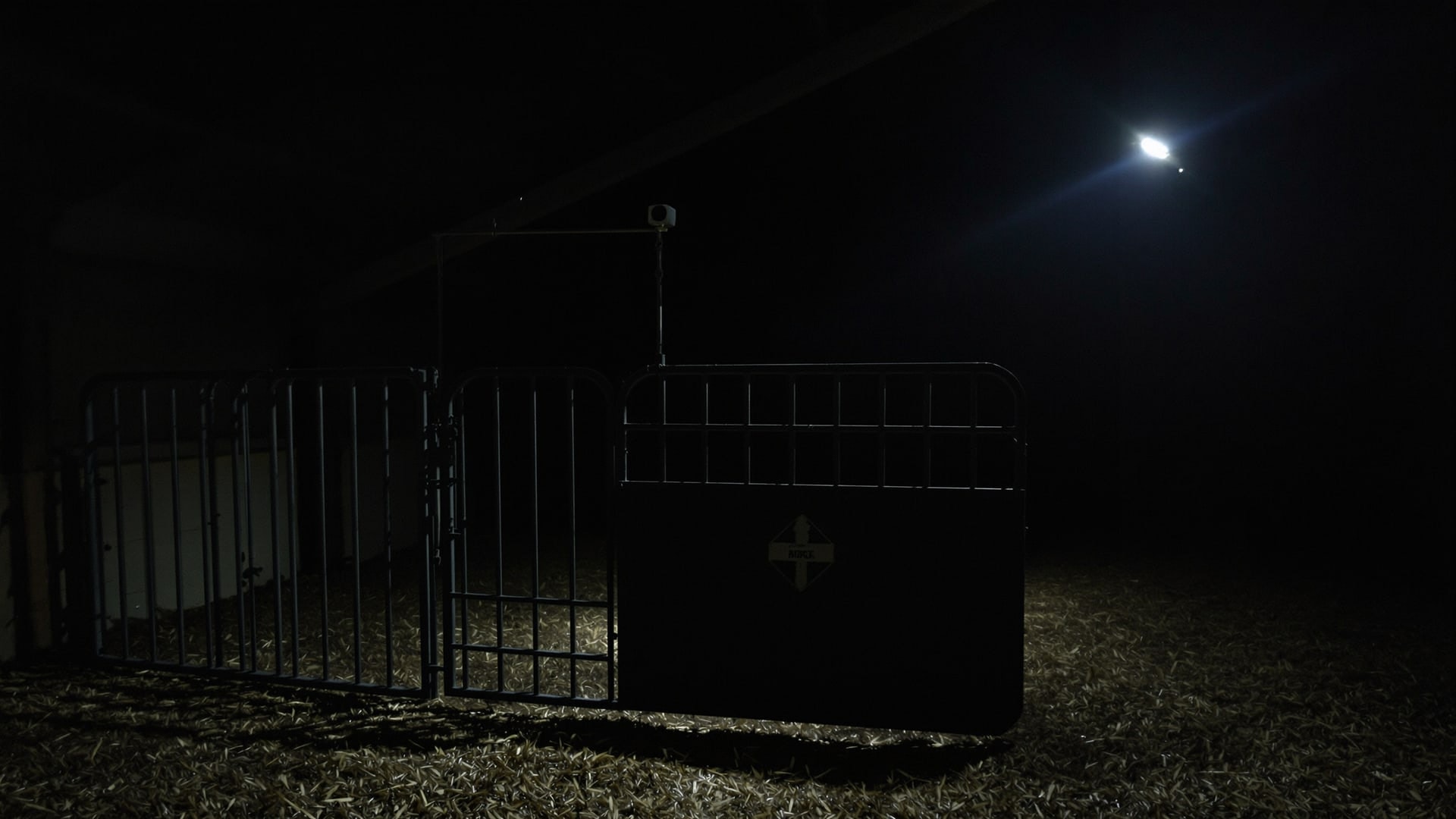
Farm CCTV was the part of Handykam's camera work that sat closest to its wildlife roots, because the requirements overlap almost completely: cameras in unheated buildings, long cable runs, no mains where you want the camera, animals that must not be disturbed, and someone who wants to watch from indoors at three in the morning. The company approached it methodically.
Two jobs, not one
Farm cameras almost always do two quite different things, and specifying for only one of them is the usual mistake.
Husbandry
Watching livestock — and above all watching them at night. A camera in a lambing or calving shed saves an enormous number of cold walks across a yard, and it saves the disturbance those walks cause: a stock keeper checking on a screen sees natural behaviour, where one walking in sees animals reacting to a person. Cameras were also used for isolation pens, for animals under veterinary observation, and for remote referral where a vet could see a case without a journey.
Security
Machinery, fuel and oil tanks, quad bikes and ATVs, trailers, horse boxes, tools, stock, and the gateways and tracks that give access to all of them. Fly-tipping and theft from honesty boxes were routine enquiries too.
The specifications differ. Husbandry wants a wide view, good low-light performance and continuous availability. Security wants recognition detail at specific points and reliable recording. One camera rarely does both well, which is why a farm system is usually a small number of carefully placed cameras rather than a lot of vaguely aimed ones.
Why evidence matters here specifically
A great deal of rural crime goes unresolved for want of evidence. Rural theft costs the sector many millions a year, with agricultural machinery, livestock, all-terrain vehicles and four-wheel-drive vehicles consistently among the largest categories — the NFU publishes the current figures and analysis. Recorded footage changes the odds in a way that little else does, and it can also affect what an insurer is willing to do. The other benefit is more mundane and more common: cameras settle disputes about deliveries, contractors, gates left open and damage nobody remembers causing.
The practical constraints on a farm
- Distance. Buildings are spread out and often far from the house. Ethernet over copper runs to about 100 metres; beyond that you need a switch part-way, fibre, or a wireless link between buildings.
- Power. Frequently the deciding factor. Power over Ethernet, feeding cameras from a switch in a building that does have power, solves more farm installations than anything else.
- Environment. Dust in a grain store, ammonia in a livestock shed, salt air near the coast, and pressure washing. Housings and — critically — cable connectors have to be genuinely sealed. Connectors, not cameras, are what fail.
- Connectivity. Rural broadband could not always be relied on, so systems were built to record locally and work on the internal network whether or not the line was up. Remote viewing was treated as a bonus rather than a foundation.
- Vermin. Rodents chew cable. Runs need protecting in conduit anywhere they can be reached.
Watching without disturbing
Infra-red illumination is invisible to livestock as well as to wildlife, which is the whole reason it is used for night monitoring. Cameras should be mounted where an animal cannot reach them and where a person moving through the building will not knock the alignment — high enough to be out of the way, low enough to see faces and feet rather than backs.
Cameras, wildlife and farms
One genuine crossover: farms are excellent wildlife sites, and the same equipment covers both. Barn owls hunt farmland and readily use boxes in and on farm buildings — see How to build a barn owl box and the Barn Owl Trust. Barn conversions and building work are the main reason those nesting places disappear, and a farm putting up a box is doing something genuinely useful. Some holdings also used cameras to stream wildlife to holiday visitors, which is a pleasant use of an installation bought for other reasons.
The legal position
The same rules apply as anywhere. Cameras covering public roads, rights of way or a neighbour's land engage data protection law — see the ICO's guidance — and cameras covering areas where workers operate carry additional obligations. Aim to exclude what you do not need.
Related pages: Cornwall CCTV · DVR and NVR FAQ · Conservation