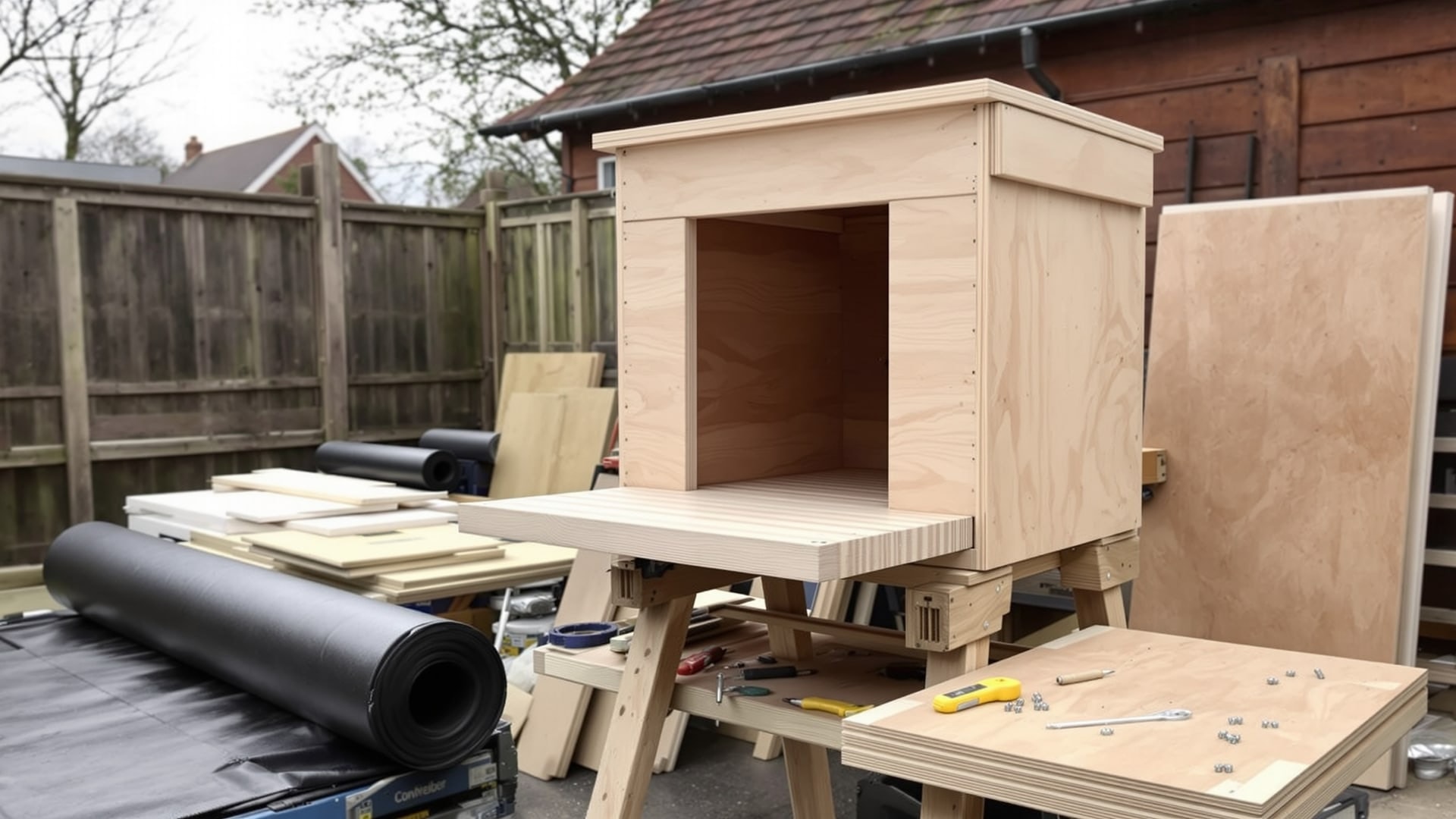
How to build a barn owl box
Handykam's barn owl box design reflected guidance from a barn owl conservation charity and the company's own outdoor owl box was built to, and from why each feature was there.
If you intend to build and put up a box rather than read about one, go to the Barn Owl Trust's nestbox guidance first. It is the authoritative, current, free source on the subject, and it covers siting — which matters more than construction.
Why boxes matter for this species
Barn owls nest in cavities: hollow trees, ledges in old barns, gaps in derelict stone buildings. That stock has been steadily removed by barn conversion, demolition, and the loss of over-mature trees. Well-built boxes in the right places genuinely substitute for it, and box provision has become mainstream conservation rather than a hobby. Just as important is what surrounds the box: barn owls hunt small mammals in rough, tussocky grassland, and a box beside a closely grazed or intensively cropped field has nothing to feed a brood from. The species' ecology is worth understanding before the woodwork starts.
The design principles
Size and shape
A barn owl box is big — much bigger than people expect. It needs a deep floor area so growing owlets can move away from the entrance, and enough internal depth that a young bird cannot simply topple out. A box that is too small produces exactly the failure it is meant to prevent.
The owlet landing tray
This is the detail that separates a proper outdoor owl box from a large bird box. Owlets clamber out and explore well before they can fly reliably. A tray or platform outside the entrance gives them somewhere to land and a route back in, and turns an early excursion into an anecdote rather than a fatality. On a tree-mounted box it works together with the choice of a rough-barked trunk that a young bird can climb.
Drainage and ventilation
Ventilation holes in the base, a generously overhanging roof, and sealed joints. A damp box is a failed box: it rots, it chills a brood, and it will not be reused.
The service hatch
A hinged hatch, so the box can be inspected and cleaned without being dismantled or taken down. Boxes accumulate pellets and debris and need periodic clearing — strictly outside the breeding season, and by someone permitted to do it.
Camera readiness
If there is any chance a camera will ever go in, build the provision now: a mounting point and a drilled, trunked cable route. Retrofitting a camera to a box fifteen feet up a tree is a substantially worse job than fitting one on a workbench.
Materials that survive
- Pressure-treated exterior plywood, 12mm or thicker, from a certified sustainable source. Thin ply flexes, and flexing works fixings loose.
- Stainless steel screws. Ordinary steel rusts out of wet timber within a few seasons.
- Glue as well as screws, for rigidity under the load of a heavy box on a windy mounting.
- A felted roof using a long-life polymer roofing felt, and sealed plywood edges — an unsealed ply edge wicks water and delaminates.
- No preservative inside. Treat and seal the exterior; leave the interior bare.
A box built this way weighs around fifteen kilos, which is a design consideration in itself: it needs a proper mounting bar and hooks, and it goes up on ropes with two people, not carried one-handed up a ladder.
Siting
A large tree with an exposed trunk and rough bark, adjacent to rough grassland with a good small-mammal population, with a clear flight line in and out, and the entrance sheltered from the prevailing wet wind. Indoor boxes in barns and outbuildings work at least as well where a suitable building exists, and are considerably easier to service. Then leave it: occupation can take a season or several, and a box that appears to have been ignored has usually just not been found yet.
The legal position
Barn owls are listed on Schedule 1 of the Wildlife and Countryside Act 1981. It is an offence to disturb them intentionally or recklessly at or near an active nest, and that includes inspecting an occupied box or fitting equipment into one. Doing so requires a licence — Natural England's guidance sets out the position in England. Install and modify boxes outside the breeding season, and if you want an occupied box checked, ask a licensed local group.
Supporting the work
The organisations that publish this guidance for free are charities. If you build a box using their designs, the Barn Owl Trust is worth supporting, as is your local Wildlife Trust. And a box that gets used is worth recording: the BTO Nest Record Scheme is where an observation from a box camera turns into data.
Related pages: Outdoor owl box (HK100007) · Fitting an owl box camera · Conservation