Cornwall CCTV — cameras, technology and installation
Handykam ceased trading. Handykam's CCTV supply and installation service no longer exists. No survey, quotation, installation or support can be arranged, and nothing described here is available.
Alongside the wildlife cameras, Handykam ran a separate CCTV line serving Cornwall and Devon. It was a natural extension: a nest box camera and a CCTV camera are the same object with different expectations of it, and fifteen years of working with sensors, lenses, cable runs, recorders and infra-red transferred across directly. The company approached system specification methodically — which is still a reasonable description of what a good local installer does.
What the line covered
Single cameras through to multi-camera systems, analogue and network, supplied on their own or professionally installed. In practice the work fell into recognisable groups:
- Home — house, garden, shed, car, holiday lets
- Business — premises, shops, industrial units, yards, restaurants and pubs
- Farm — barns, fuel and oil stores, livestock, machinery, horse boxes and trailers; see Farm CCTV
- Groups and clubs — golf clubs, allotments, gyms, community buildings
- Churches — nave, roof and lead, graveyards
- Vehicle — parking, reversing and dash cameras
- Marine — boats, marinas, dry docks and remote moorings
The technical offering was HD recording twenty-four hours a day, colour by day and infra-red at night, playback that a non-specialist could actually use, and access from phones and computers — with systems designed so that cameras could be added later rather than requiring a fresh installation.
How a system was specified
The company's approach began with a site visit rather than a catalogue, and the sequence is worth recording because it is the part most often skipped:
- Understand what the cameras are actually for. Deterrence, identification and evidence are three different jobs needing three different specifications. A camera that shows "a person was here" is a much cheaper camera than one that shows which person.
- Walk the site. Where are the approaches, the dark corners, the places a vehicle can reach? Cameras go where people have to pass, not where the wall is convenient.
- Work out the lens before the camera. Field of view against distance decides what you will get. See CCTV camera lenses.
- Plan the cabling and the power. On a rural property this is usually the largest part of the job, and Power over Ethernet often decides the layout.
- Size the recording. Retention period, number of cameras, resolution and whether recording is continuous or motion-triggered — the arithmetic is in the DVR and NVR FAQ.
- Then choose equipment, being independent about it. Being a small independent rather than a single-brand dealer meant the specification could follow the site rather than the stock list.
Rural crime, which is the real reason most people called
Rural crime rose steadily through the years this service operated, and Cornwall and Devon were no exception. What came with it was the fear of crime, which affects daily life considerably more than the statistics suggest — and which is what most enquiries were really about. A good system gives back a sense of control as much as it produces evidence. Current figures and analysis are published by the NFU, whose rural crime reporting is the standard reference for the sector.
The legal side
Domestic CCTV that only covers your own property is largely unregulated. As soon as a camera captures a neighbour's garden, a shared drive or a public footpath, it engages data protection law, and the operator takes on real obligations around signage, retention, and responding to requests for footage. The Information Commissioner's guidance is the authority. The practical advice was always the same: angle cameras to exclude what you do not need. It avoids the legal question, avoids the neighbour dispute, and produces better footage of the thing you actually care about.
The Cornish part
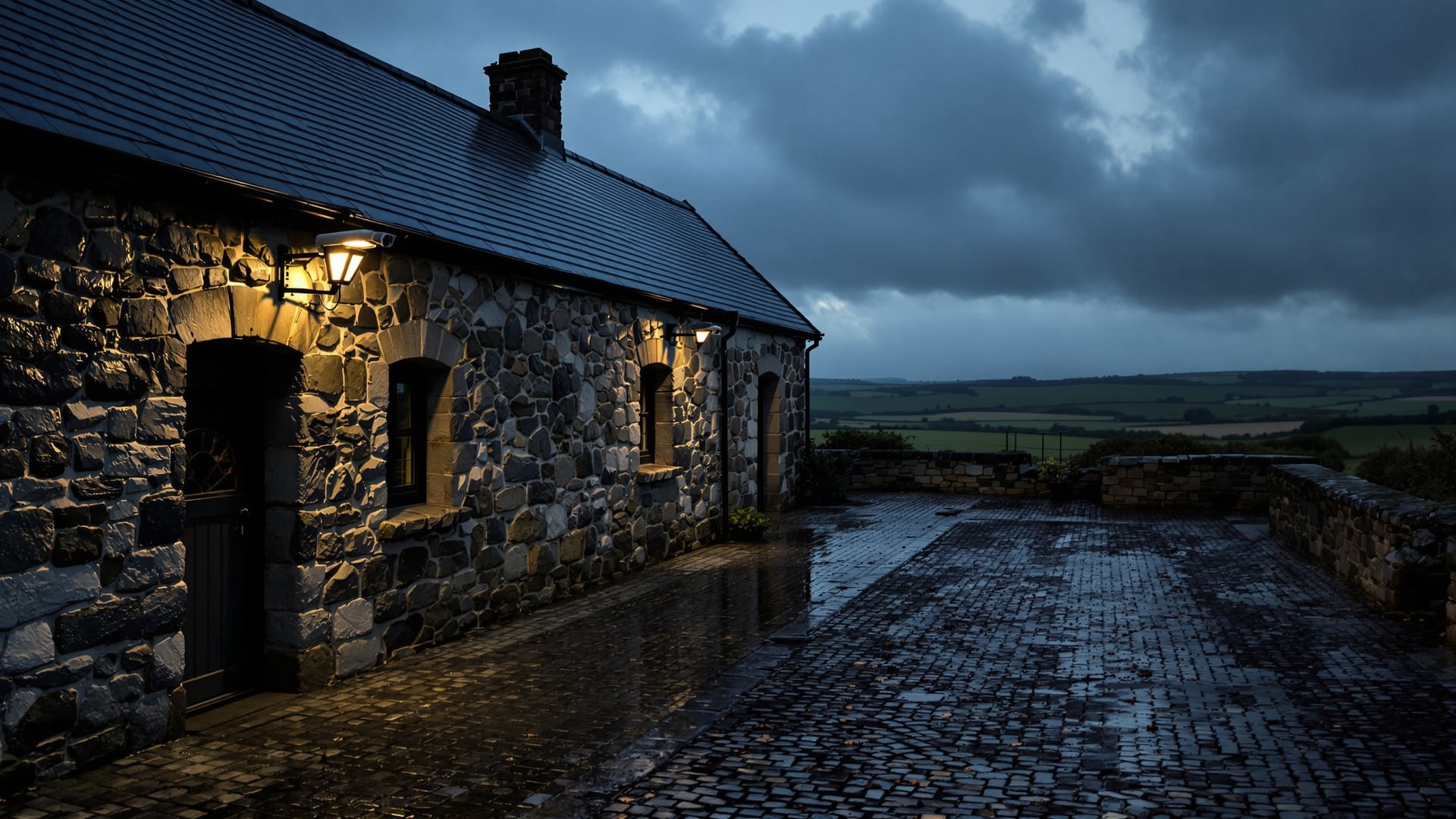
Local knowledge genuinely mattered here. Cornish buildings are granite, cob and slate, often with walls that defeat wireless links outright; properties are frequently long, low and spread out; salt air eats cheap housings and connectors within a season or two; and broadband in parts of the county could not be relied on for remote viewing. A system specified for a suburban semi does not survive a farmyard above the north coast. That is not a sales point, it is just what the county does to equipment.
Related pages: Farm CCTV · Digital IP versus analogue · FAQ: wired outdoor analogue camera · CCTV glossary